Jobe’s or Espoma Fertilizer? Which Is Better for Tomatoes?

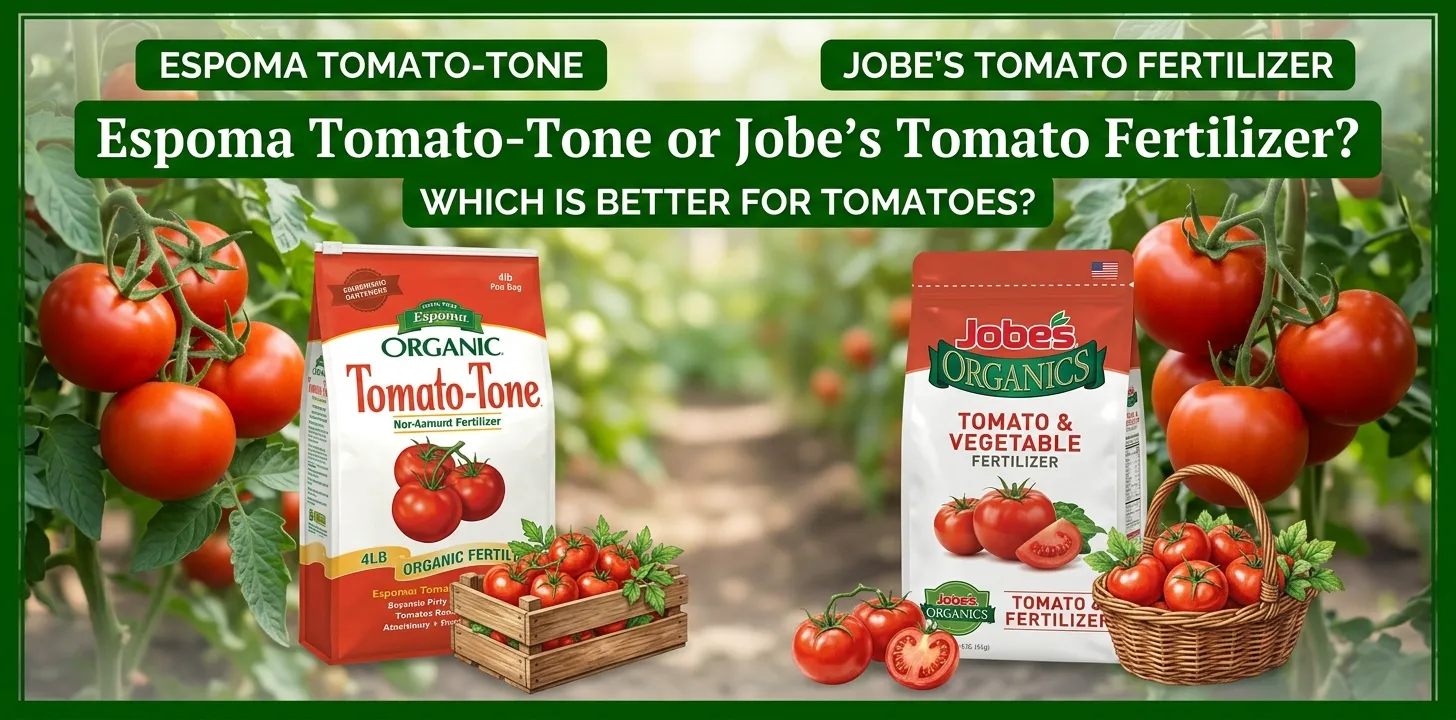
If your main goal is a strong tomato harvest, Espoma Tomato-tone is the better overall choice for most home gardeners, while Jobe’s Organics Vegetable & Tomato is a good pick if you want a lower-nitrogen, fast-acting granular fertilizer that you can apply less often. The two products are both organic options, but their N-P-K ratios, feeding schedules, and soil-building ingredients differ.
The choice is not really about which brand is “better” in every garden. It depends on whether you care most about fruit production, feeding frequency, soil microbes, or using one fertilizer for both tomatoes and other vegetables.
The short answer
For fruit-focused tomato feeding, I would choose Espoma Tomato-tone. Its 3-4-6 analysis supplies more potassium than Jobe’s 2-5-3 formula, and it also provides 8% calcium plus beneficial microbes. Espoma specifically formulates Tomato-tone for tomatoes and recommends feeding established plants twice a month during the growing season.
Jobe’s is still a solid option, especially if you want a 2-5-3 organic fertilizer with Biozome and a longer 4–6 week interval between applications.
Jobe’s vs. Espoma Tomato-tone at a glance
| Feature | Jobe’s Organics Vegetable & Tomato | Espoma Tomato-tone |
|---|---|---|
| N-P-K | 2-5-3 | 3-4-6 |
| Main use | Vegetables and tomatoes | Tomatoes and other fruiting crops |
| Feeding interval | About every 4–6 weeks | Twice monthly during growing season |
| Organic option | Yes; OMRI-listed product | 100% natural and organic approved |
| Beneficial microbes | Biozome | Beneficial microbes |
| Calcium | Product testing/label information includes calcium | 8% calcium |
| Best fit | Simple, less-frequent feeding | Tomato-focused, fruit production |
| Granular form | Yes | Yes |
Jobe’s product information lists a 2-5-3 analysis and a 4–6 week feeding interval. Espoma lists Tomato-tone as 3-4-6, with 8% calcium and a slow-release feeding approach.
The biggest difference: their N-P-K ratios
The three numbers on a fertilizer bag represent nitrogen, phosphate, and potash.
Jobe’s Vegetable & Tomato fertilizer is 2-5-3, while Espoma Tomato-tone is 3-4-6.
That difference matters because tomatoes need more than just leafy growth. Once plants are established and producing flowers and fruit, potassium becomes an important part of a balanced feeding program.
Espoma’s higher potassium number makes Tomato-tone particularly attractive for gardeners who want a fertilizer designed specifically around fruiting plants. It also has a little more nitrogen than Jobe’s, although neither product is a high-nitrogen fertilizer.
Jobe’s, on the other hand, has slightly more phosphate in its guaranteed analysis.
That does not mean you should automatically choose the fertilizer with the higher phosphorus number. Adding extra phosphorus without a soil-related reason is not a good way to guarantee more tomatoes. Your existing soil fertility matters.
Why Espoma Tomato-tone stands out for tomatoes
Espoma Tomato-tone is specifically formulated for tomatoes rather than simply being a general vegetable fertilizer. Espoma recommends it for all tomato varieties and also lists peppers, squash, and melons as suitable fruiting crops.
Its 3-4-6 formula also contains:
- 8% calcium
- 3% sulfur
- Slow-release nitrogen
- Beneficial Bacillus microbes
- Organic ingredients such as feather meal, poultry manure, bone meal, alfalfa meal, greensand, humates, sulfate of potash, and gypsum
The calcium is worth mentioning, but don’t treat fertilizer as a guaranteed cure for blossom-end rot. Watering problems and inconsistent moisture can also contribute to blossom-end rot. Good watering practices remain important even when your fertilizer contains calcium. Espoma itself advises regular watering as part of tomato growing.
For a gardener who wants one product specifically aimed at tomatoes, Tomato-tone has a very clear advantage in product specialization.
Where Jobe’s Organics makes more sense
Jobe’s Organics Vegetable & Tomato fertilizer is a 2-5-3 granular fertilizer designed for tomatoes and vegetables. Its product information says it can be used for soil preparation, new plantings, and established plants.
One of its main differences is Biozome, Jobe’s blend of beneficial microorganisms intended to support soil activity. The product is also listed by OMRI for use in certified organic production under the applicable rules, although OMRI makes clear that an OMRI listing is not the same thing as organic certification of the product or an endorsement.
Jobe’s also has a practical advantage for gardeners who don’t want to fertilize as frequently. Current product information recommends applying it about every 4–6 weeks.
So if you have several vegetable beds and want a single organic granular fertilizer that works for tomatoes and other vegetables, Jobe’s can be a convenient choice.
Feeding schedule: Jobe’s is simpler, Espoma is more frequent
This is one of the most noticeable practical differences.
Jobe’s recommends feeding every 4–6 weeks for its Vegetable & Tomato granular fertilizer.
Espoma’s current Tomato-tone directions call for feeding established plants twice per month from May through August. For a single plant, the listed rate is 3 tablespoons per application.
That means:
- Choose Jobe’s if you prefer fewer fertilizer applications.
- Choose Tomato-tone if you are comfortable following a more frequent feeding schedule designed specifically for tomatoes.
Neither schedule is automatically better for every garden. Always follow the label on the specific bag you have, because product formulas and directions can change.
Which is better for raised-bed tomatoes?
For a raised bed used mainly for tomatoes, Espoma Tomato-tone gets my edge.
The reason is simple: its formula is specifically aimed at tomatoes, provides 8% calcium, and supplies more potassium than Jobe’s 2-5-3 formula.
But there is an important exception.
If your raised bed contains several vegetables and you want one fertilizer for tomatoes, peppers, and other crops, Jobe’s Vegetable & Tomato can be more convenient.
Also, don’t fertilize a raised bed heavily just because the plants look hungry. A soil test can tell you whether your bed already contains adequate nutrients.
Which is better for container-grown tomatoes?
For container tomatoes, Espoma Tomato-tone is a strong choice, but application rate becomes especially important.
Espoma provides specific directions for potted plants. Its current directions call for 1.5 teaspoons per 4 inches of pot diameter, or 1.5 tablespoons per 12-inch pot diameter.
Containers have much less soil than garden beds, so nutrients can be depleted more quickly. At the same time, overfertilizing a container can create problems because there is less soil to spread the fertilizer through.
For a tomato in a five-gallon container, don’t simply guess at the amount based on what you use in a garden bed. Use the product’s container directions.
Which is better for organic gardeners?
Both are suitable choices for gardeners looking for organic fertilizer options.
Jobe’s Vegetable & Tomato 2-5-3 is listed by OMRI, and the current OMRI certificate for the product shows an expiration date of September 1, 2027.
Espoma describes Tomato-tone as 100% natural and organic approved and says it contains no sludges or fillers.
If you are growing under a certified-organic program, don’t rely only on the word “organic” on a package. Check the current product listing and the requirements of your certifier before using any fertilizer.
What about blossom-end rot?
This is where tomato fertilizer comparisons can become misleading.
Espoma Tomato-tone contains 8% calcium, so it looks attractive if blossom-end rot is a concern.
But blossom-end rot is not simply a matter of “not enough calcium in the fertilizer.” Tomato plants need to take up and move calcium properly, and uneven soil moisture can interfere with that process.
For example, suppose a tomato plant grows well during a rainy week and then goes several hot days with very little water. The plant may experience stress even though calcium is present in the soil.
A better approach is to combine appropriate fertilization with consistent watering and mulch.
Two practical examples
Example 1: A backyard tomato bed
Imagine you have six tomato plants growing in a sunny backyard garden. The soil is reasonably fertile, and you mainly want healthy plants that produce plenty of fruit.
In this situation, Espoma Tomato-tone would be my first choice. Its tomato-specific formula and higher potassium content make it a straightforward fit for an established fruiting crop.
Follow the label rather than adding extra fertilizer whenever the plants look slightly pale.
Example 2: A mixed vegetable garden
Now imagine you have tomatoes growing beside peppers, cucumbers, and other vegetables. You would rather keep your fertilizer routine simple and don’t want to feed every few weeks.
Jobe’s Organics Vegetable & Tomato may make more sense. Its 2-5-3 formula is designed for tomatoes and vegetables, and its directions call for applications about every 4–6 weeks.
The convenience of one product can matter more than a small difference in fertilizer analysis.
What if you mean Espoma Garden-tone?
If by “Espoma fertilizer” you mean Garden-tone, the comparison changes slightly.
Garden-tone is a general vegetable fertilizer with a 3-4-4 analysis, while Tomato-tone is specifically formulated for tomatoes and has a 3-4-6 analysis. Espoma’s own plant-food finder recommends Tomato-tone for tomatoes.
So if the choice is:
Jobe’s Vegetable & Tomato 2-5-3 vs. Espoma Garden-tone 3-4-4
the difference is much smaller.
Both are reasonable vegetable fertilizers. Garden-tone makes sense if you want one fertilizer for a broad vegetable garden, while Jobe’s offers the benefit of its Biozome-based formula and a 4–6 week feeding interval.
But if you are specifically asking, “Which Espoma product should I buy for tomatoes?” I would choose Tomato-tone rather than Garden-tone.
Jobe’s or Espoma: Which one should you buy?
Here is the simplest way to decide:
| Your situation | Better choice |
|---|---|
| You mainly grow tomatoes | Espoma Tomato-tone |
| You want a tomato-specific fertilizer | Espoma Tomato-tone |
| You want more potassium in the N-P-K analysis | Espoma Tomato-tone |
| You want a fertilizer with listed calcium | Espoma Tomato-tone |
| You prefer feeding every 4–6 weeks | Jobe’s |
| You grow tomatoes and many other vegetables | Jobe’s |
| You want Jobe’s Biozome microbial blend | Jobe’s |
| You want Espoma’s general vegetable fertilizer | Garden-tone |
| You want Espoma’s tomato-specific product | Tomato-tone |
Don’t choose fertilizer by N-P-K alone
A common mistake is to look only at the three numbers on the front of the bag.
Your tomato plants also depend on:
- Soil fertility
- Sunlight
- Water
- Soil drainage
- Root space
- Variety
- Temperature
- Pest and disease pressure
If your soil already has plenty of phosphorus, buying a fertilizer mainly because it has a higher phosphorus number may not help.
Likewise, adding more fertilizer because a tomato plant is not producing fruit can make the problem worse if the real issue is insufficient sunlight, heat stress, poor pollination, or watering problems.
A soil test is a much better starting point when you are unsure what nutrients your garden actually needs.
Final verdict
Espoma Tomato-tone is the better overall pick for most gardeners who are choosing a fertilizer specifically for tomatoes. Its tomato-focused 3-4-6 formula, 8% calcium, slow-release feeding, and established tomato feeding directions give it an edge for a dedicated tomato garden.
Jobe’s Organics Vegetable & Tomato is the better convenience choice if you want a 2-5-3 organic granular fertilizer for tomatoes and other vegetables and prefer applying fertilizer every 4–6 weeks.
One practical tip: whichever product you choose, follow the label rate and keep your tomato plants evenly watered. More fertilizer is not a shortcut to more tomatoes.
Frequently Asked Questions
Is Jobe’s or Espoma better for tomato plants?
Espoma Tomato-tone has the edge when the main goal is feeding tomatoes because it is specifically formulated for them and has a 3-4-6 analysis with 8% calcium. Jobe’s is a good alternative if you want a 2-5-3 fertilizer that also works broadly for vegetables.
Can I use Jobe’s and Espoma fertilizer together on tomatoes?
It is usually unnecessary to combine two complete fertilizers. Both provide multiple nutrients, so using them together can make it easier to overapply certain nutrients; choose one product and follow its label unless a soil test or other specific need indicates otherwise.
Is Espoma Garden-tone or Tomato-tone better for tomatoes?
Tomato-tone is the more targeted choice because Espoma specifically recommends it for tomatoes, and its 3-4-6 analysis is different from Garden-tone’s 3-4-4 formula. Garden-tone is better suited to gardeners who want one general fertilizer for a range of vegetables.