Jobes or Miracle-Gro? Which Is Better for Tomatoes?

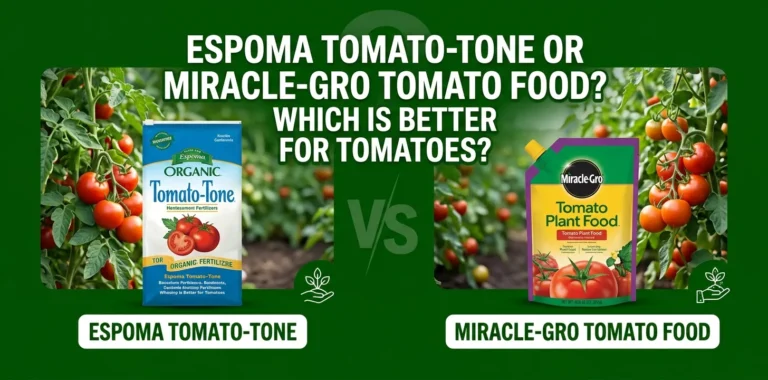
For most home gardeners, Jobe’s is the better choice if you want an organic, slow-feeding fertilizer that supports soil health, while Miracle-Gro is better if you want a fast, water-soluble feed that delivers nutrients quickly. The right choice depends less on the brand and more on your soil, tomato variety, growing setup, and nutrient needs.
The two brands take very different approaches to feeding tomato plants. Jobe’s Organics Vegetable & Tomato Granular uses a 2-5-3 N-P-K formula and includes organic ingredients plus its Biozome blend. Miracle-Gro’s Water Soluble Plant Food for Vegetables and Herbs uses an 18-18-21 formula and is designed to feed plants quickly when mixed with water.
That difference matters because a tomato plant does not simply need “more fertilizer.” Too much nitrogen, for example, can produce lots of leafy growth while delaying flowering and fruit production.
Jobe’s vs. Miracle-Gro for Tomatoes at a Glance
| Factor | Jobe’s Organics | Miracle-Gro |
|---|---|---|
| Main approach | Organic granular feeding | Water-soluble feeding |
| Example tomato/vegetable formula | 2-5-3 | 18-18-21 |
| Nutrient release | Slower, steady feeding | Fast, water-soluble feeding |
| Organic gardening | Strong fit | Depends on the specific product |
| Soil-health focus | Stronger | More focused on plant feeding |
| Ease of application | Simple granular application | Very easy when mixed with water |
| Best for | Gardeners wanting organic soil-based feeding | Gardeners wanting quick nutrient delivery |
| Feeding frequency | Jobe’s granular tomato formula: every 4–6 weeks | Follow the specific Miracle-Gro product label |
| Best overall use case | In-ground and raised-bed organic gardens | Containers and gardeners who prefer quick feeding |
Product formulas can vary within both brands, so always check the fertilizer analysis and directions on the package rather than assuming every Jobe’s or Miracle-Gro product is identical.
What Makes Jobe’s a Good Choice for Tomatoes?
Jobe’s Organics Vegetable & Tomato Granular is specifically formulated for vegetables and tomatoes. Its listed N-P-K analysis is 2-5-3, and the product contains ingredients such as bone meal, processed manure, sulfate of potash, and Jobe’s Biozome microorganism blend.
The lower nitrogen number is worth noticing. Tomatoes need nitrogen, but excessive nitrogen can encourage leaves and stems at the expense of timely flowering and fruit production. University of Minnesota Extension similarly warns that too much nitrogen can make tomato plants bushy and slow to bear fruit.
Jobe’s also focuses on the soil, not just the plant. Its Biozome blend contains bacteria, mycorrhizal fungi, and archaea, which the company says are intended to improve soil conditions and plant growth.
Jobe’s is especially appealing if you garden organically
The Jobe’s Vegetable & Tomato Granular product is listed by OMRI for use in certified organic production, although OMRI makes clear that an OMRI listing is not the same thing as a product being “organic certified.”
For a gardener who wants to avoid synthetic fertilizer and prefers building soil health over time, this can be a major advantage.
Jobe’s also recommends applying its Vegetable & Tomato Granular fertilizer every 4–6 weeks.
Where Miracle-Gro Has the Advantage
Miracle-Gro takes a different approach. Its Water Soluble Plant Food for Vegetables and Herbs has an 18-18-21 fertilizer analysis and is designed to feed plants quickly. The product can be applied with a watering can or a Miracle-Gro Garden Feeder.
That makes Miracle-Gro convenient when a gardener wants nutrients delivered with watering rather than working granular fertilizer into the soil.
It can also be useful for container tomatoes, where nutrients can be depleted more quickly than in a larger garden bed.
Fast feeding can be useful when plants need nutrients
A water-soluble fertilizer gives you a straightforward way to deliver nutrients during the growing season. This can be convenient for gardeners who regularly monitor their plants and want to adjust feeding based on plant growth.
But faster feeding is not automatically better.
If your soil already contains adequate nutrients, adding more fertilizer simply because a plant is growing slowly can create an imbalance. Soil testing is a better way to determine what nutrients are actually needed.
Which N-P-K Ratio Is Better for Tomatoes?
Neither 2-5-3 nor 18-18-21 is automatically “the perfect tomato ratio.”
The three numbers represent nitrogen, phosphate, and potash on the fertilizer label. For example, an 18-18-21 fertilizer contains 18% nitrogen, 18% phosphate, and 21% potash by weight.
Jobe’s 2-5-3 formula has much lower nutrient concentrations per pound of product, but that does not mean it is weaker in a practical sense. Application rates differ, and what your soil actually needs matters more than choosing the fertilizer with the biggest numbers on the bag.
This is one reason comparing fertilizer only by N-P-K numbers can be misleading.
Don’t assume tomatoes need extra phosphorus
A common gardening idea is that more phosphorus automatically means more tomatoes. That’s too simple.
University of Minnesota Extension recommends using soil-test results to determine phosphorus and potassium needs and notes that many soils already contain enough phosphorus. It specifically advises against adding more phosphorus unless the soil test calls for it.
So if your soil already has plenty of phosphorus, choosing a fertilizer mainly because it has a higher middle number may not be the best decision.
Jobe’s or Miracle-Gro for Container Tomatoes?
For container tomatoes, Miracle-Gro can be the more convenient option, especially if you prefer feeding through watering. Water-soluble fertilizer is easy to mix and apply, while granular fertilizer requires you to measure and distribute the product around the plant correctly.
Jobe’s can still work well in containers, but you need to follow the label directions for the specific product and container size.
A container also gives you less room for fertilizer mistakes. Overfeeding a plant in a relatively small amount of growing media can be a poor strategy, so don’t increase the dose just because you want faster growth.
Jobe’s or Miracle-Gro for Raised Beds?
For a raised bed where you’re trying to build and maintain healthy soil, Jobe’s is the stronger fit for gardeners who prefer organic inputs.
Its granular tomato fertilizer is intended for vegetables and tomatoes and is applied at intervals of roughly four to six weeks according to the manufacturer’s directions.
Miracle-Gro can also be used in a raised bed when fast, water-soluble feeding is what you want. The better choice depends on your existing soil fertility and the way you prefer to manage your garden.
Before adding fertilizer to a raised bed, a soil test can tell you whether additional phosphorus, potassium, or other nutrients are actually needed.
Which Is Better for Organic Tomato Gardening?
Jobe’s wins this category.
Jobe’s Vegetable & Tomato Granular is OMRI listed, making it a natural fit for gardeners following certified-organic production requirements, subject to the applicable organic standards and product restrictions.
Miracle-Gro has many different products, so you should not assume that every product carrying the Miracle-Gro name is suitable for an organic gardening program.
If organic certification matters to you, check the exact product rather than relying on the brand name.
Which Is Easier to Use?
This depends on what you consider easy.
Jobe’s: Measure granular fertilizer, distribute it around the plant as directed, and water as appropriate.
Miracle-Gro: Measure the water-soluble plant food, mix it according to the label, and apply it while watering.
For someone who already waters tomatoes regularly, Miracle-Gro can feel simpler. For someone who wants fewer feeding events and prefers granular organic fertilizer, Jobe’s may be more convenient.
The important part is following the product label. Using extra fertilizer does not make tomatoes grow proportionally faster.
Two Common Tomato-Growing Situations
If your tomato has lots of leaves but few tomatoes
Don’t immediately add more fertilizer.
Excess nitrogen can encourage leafy growth and delay flowering and fruiting. Check growing conditions and consider a soil test before changing your fertilizer program.
If your container tomato is growing slowly
First check the basics: adequate sunlight, watering, container size, temperature, and the condition of the growing medium.
If nutrients are actually lacking, a water-soluble product such as Miracle-Gro can provide a convenient way to feed the plant. But follow the label rate rather than increasing the concentration yourself.
Which One Should You Choose?
Choose Jobe’s if:
- You want an organic fertilizer option.
- You prefer granular, slower feeding.
- You are growing tomatoes in an in-ground or raised-bed garden.
- Soil health is an important part of your gardening approach.
- You want a tomato-and-vegetable fertilizer with an OMRI-listed option.
Choose Miracle-Gro if:
- You prefer water-soluble fertilizer.
- You want nutrients delivered quickly.
- You grow tomatoes in containers and like feeding during watering.
- You want to use a watering can or garden feeder for application.
The Bigger Factor: What Your Soil Actually Needs
The biggest mistake is treating fertilizer choice as a simple brand competition.
A soil test can show whether your garden already has adequate phosphorus and potassium and whether additional nutrients are needed. Extension guidance recommends using soil-test information to choose the right fertilizer source and rate.
This matters because two tomato gardens can need completely different fertilizer programs.
For example, a raised bed that has received compost for several years may not need the same fertilizer as a newly prepared garden with poor soil fertility.
Tomatoes also have changing nutrient needs as they move from vegetative growth toward flowering and fruit production. Penn State Extension notes that nutrient management during production can involve nitrogen, phosphorus, potassium, calcium, and magnesium, depending on the crop and test results.
Frequently Asked Questions
Is Jobe’s or Miracle-Gro better for tomato plants?
Jobe’s is generally the better fit for gardeners who want organic, granular feeding and a stronger focus on soil health. Miracle-Gro is a better fit for gardeners who prefer convenient, fast-acting water-soluble feeding.
Can you use Jobe’s and Miracle-Gro together on tomatoes?
It is usually better not to combine fertilizers simply because you think more nutrients will produce more tomatoes. Different products can overlap in nutrients, so follow the label directions and use soil-test information when possible to avoid unnecessary applications.
Does Miracle-Gro make tomatoes grow faster than Jobe’s?
Miracle-Gro’s water-soluble formula is designed to provide nutrients quickly, but that does not mean it will always produce better or faster tomato growth. Plant variety, sunlight, water, temperature, soil fertility, and nutrient balance all affect growth and fruit production.
Final Verdict
Jobe’s is the better overall choice for organic tomato gardeners and people who want a slower, soil-focused fertilizer. Miracle-Gro is the better choice for fast, convenient feeding, especially when you prefer a water-soluble product.
The practical tip is simple: don’t choose fertilizer based only on the brand or the biggest N-P-K numbers. Test your soil when possible, identify what your tomatoes actually need, and follow the fertilizer label. That approach is more reliable than continually adding more plant food.