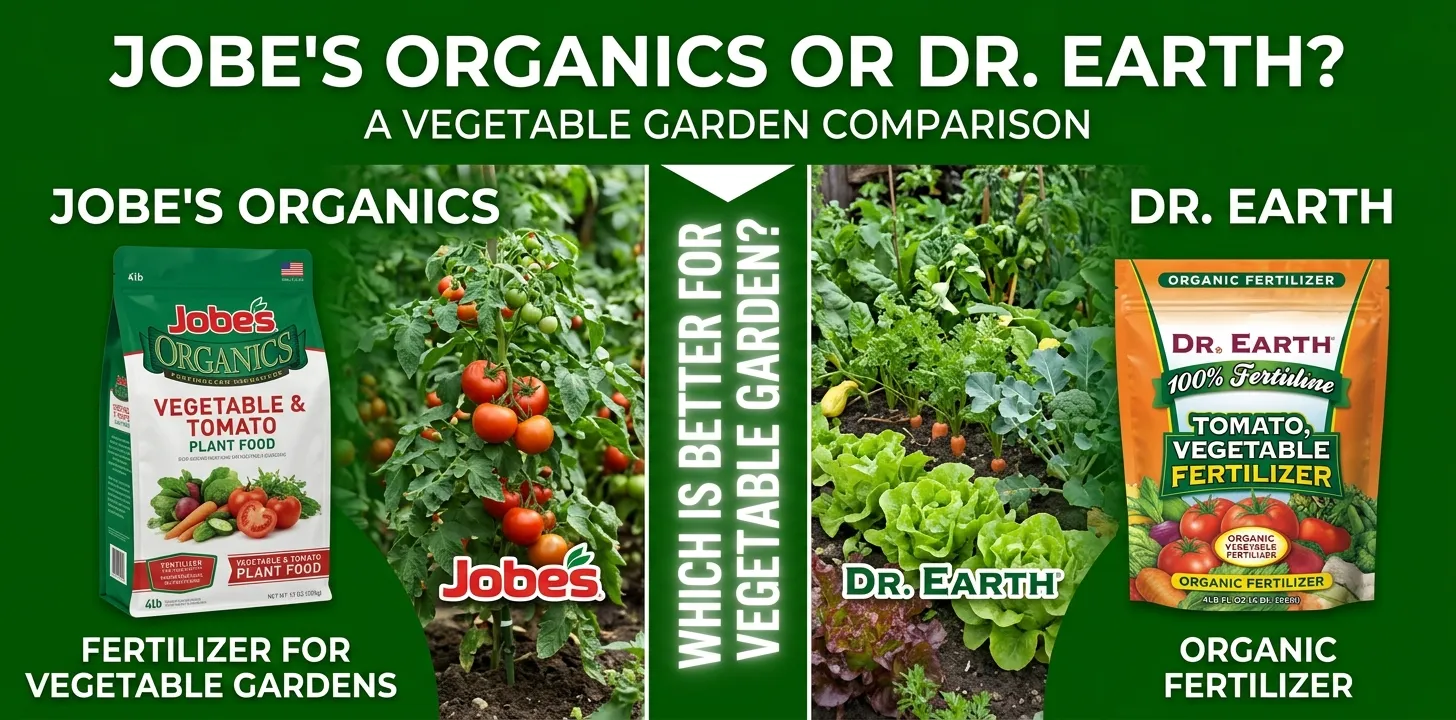
Jobes Organics or Dr. Earth? Which Is Better for Vegetable Gardens?

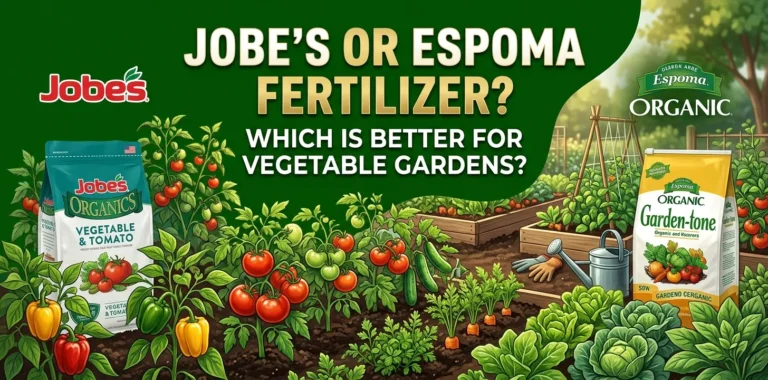
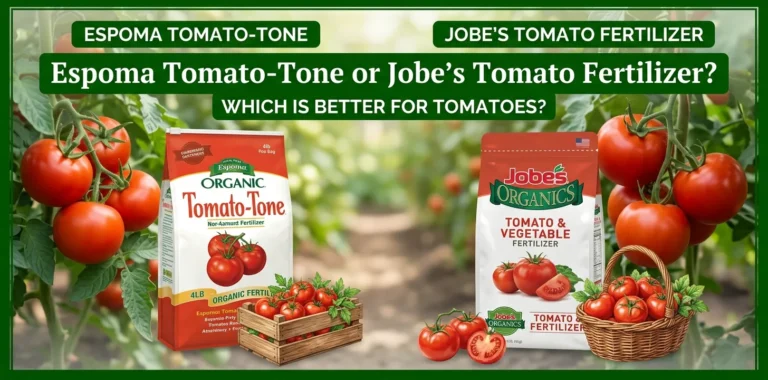
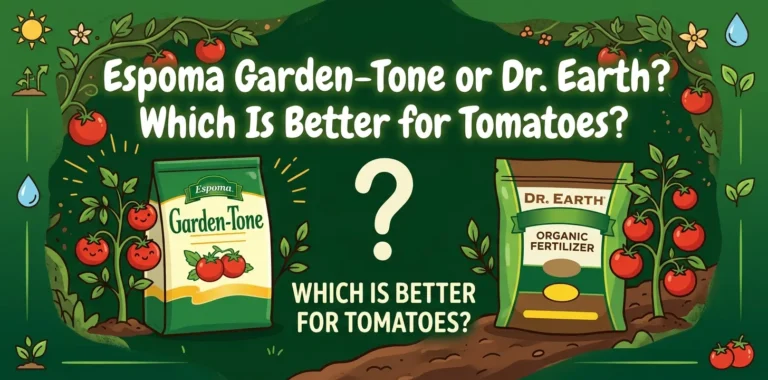
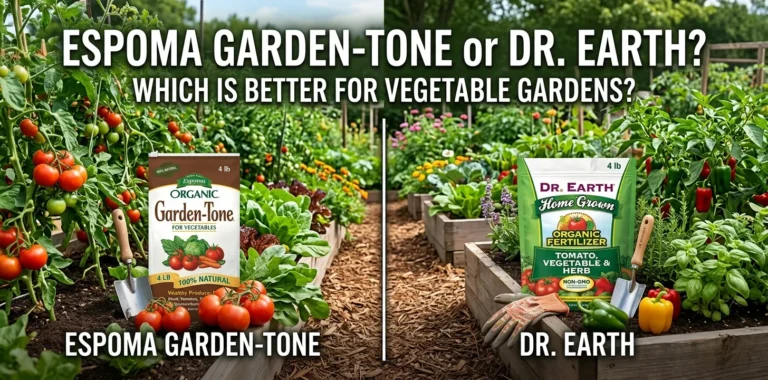
If you are choosing between Jobe’s Organics and Dr. Earth for a vegetable garden, Dr. Earth Home Grown has the edge for gardeners who want a higher-nitrogen, higher-phosphorus granular fertilizer with beneficial microbes and mycorrhizae. Jobe’s Organics Vegetable & Tomato is a strong alternative, especially if you want a simpler 2-5-3 formula and a generally lower-cost option.
The short answer
For most vegetable gardeners, Dr. Earth is the better choice when building soil health and supporting fruiting vegetables are the main goals. Its Home Grown formula is 4-6-3 and includes beneficial microbes and mycorrhizae. Jobe’s Vegetable & Tomato fertilizer is 2-5-3 and also contains beneficial microorganisms through its Biozome blend.
That does not mean Jobe’s is a poor choice. In fact, the difference is fairly small for many home gardens. Soil condition, crop needs, fertilizer application, watering, and sunlight can have a much larger effect on your harvest than choosing between two similar organic fertilizers.
Jobe’s Organics vs. Dr. Earth at a glance
| Factor | Jobe’s Organics Vegetable & Tomato | Dr. Earth Home Grown |
|---|---|---|
| NPK | 2-5-3 | 4-6-3 |
| Form | Granular | Granular |
| Designed for | Vegetables and tomatoes | Vegetables, tomatoes and herbs |
| Beneficial microbes | Yes, through Biozome | Yes, through TruBiotic |
| Mycorrhizae | Yes | Yes |
| Main advantage | Simple vegetable-specific formula | Higher N and P plus biologically active ingredients |
| Application | Every 4–6 weeks | Initial planting, transplanting and regular top dressing |
| Best fit | Gardeners wanting a straightforward vegetable fertilizer | Gardeners focused on soil biology and strong vegetable growth |
Product formulas and application directions can vary by specific product, so always follow the current package label. Jobe’s currently lists its Vegetable & Tomato granular fertilizer at 2-5-3 with application every 4–6 weeks, while Dr. Earth lists Home Grown at 4-6-3 for vegetables, tomatoes and herbs.
What makes the two fertilizers different?
The biggest difference is not simply the brand name. It is the fertilizer analysis, ingredient mix, and biological approach behind each product.
Jobe’s Organics Vegetable & Tomato
Jobe’s Organics Vegetable & Tomato granular fertilizer has an NPK ratio of 2-5-3. The company lists bone meal, potash, processed manure and its Biozome blend among the ingredients.
Biozome contains beneficial bacteria, mycorrhizal fungi and archaea. Jobe’s says these microorganisms are intended to improve soil quality and support plant growth.
That makes Jobe’s a good fit if you want an organic granular fertilizer made specifically for vegetables and tomatoes without moving to a more complex fertilizing program.
Dr. Earth Home Grown
Dr. Earth Home Grown has a 4-6-3 NPK analysis, giving it more nitrogen and phosphorus by analysis than Jobe’s 2-5-3 formula. It is formulated for vegetables, tomatoes, herbs, containers and garden soil.
Dr. Earth also includes beneficial soil microbes and mycorrhizae through its TruBiotic system. The company describes the formula as using nutrients from sources such as land plants, ocean plants, fish, fish bones and mined minerals.
For gardeners who want a biologically active fertilizer with a somewhat stronger nutrient analysis, this gives Dr. Earth an advantage.
Which is better for tomatoes, peppers and other fruiting crops?
Dr. Earth gets the slight advantage for many fruiting vegetables.
Tomatoes, peppers, eggplants and squash need steady nutrition throughout the growing season. Dr. Earth Home Grown’s 4-6-3 analysis provides more nitrogen and phosphorus per unit of fertilizer than Jobe’s 2-5-3.
However, a higher NPK number does not automatically mean better harvests. Plants can suffer if fertilizer is overapplied, and nutrient needs depend on the soil and crop.
For example, if a raised bed already contains plenty of nutrients, adding more fertilizer simply because the analysis is higher may not improve results.
Which is better for raised beds?
Dr. Earth is a strong choice for new or intensively planted raised beds, but Jobe’s can work very well too.
Raised beds often have relatively controlled soil mixes, so knowing what is already in the soil matters. A soil test can tell you whether additional nutrients are actually needed.
If your raised bed contains a basic soil-and-compost mix and you want an organic granular fertilizer with beneficial microbes, either product can fit.
For a gardener who wants the stronger nutrient analysis, I would lean toward Dr. Earth.
For someone who already has fertile soil and mainly wants a straightforward vegetable fertilizer, Jobe’s is perfectly reasonable.
Which is better for containers?
Container vegetables have a different challenge: their growing medium is limited.
Tomatoes and peppers in containers can use nutrients quickly, and regular watering can also move soluble nutrients through the pot.
Dr. Earth Home Grown is specifically listed for container plantings, so it is a convenient option for gardeners growing vegetables in pots.
Jobe’s also offers vegetable fertilizer in multiple forms, including granular, spikes and a water-soluble vegetable and tomato fertilizer.
That wider range can make Jobe’s attractive if you prefer different application methods.
Which one is easier for beginners?
Jobe’s Organics has a slight advantage for simplicity.
Its Vegetable & Tomato granular fertilizer has a clearly defined vegetable-and-tomato use and lists application every 4–6 weeks.
Dr. Earth is also beginner-friendly, but its Home Grown product is positioned for several uses, including planting, transplanting, top dressing and compost tea.
A new gardener should not feel pressured to create a complicated feeding schedule. Start with the product label, use the recommended amount, and observe how your plants respond.
Which one is better for soil health?
Both are designed to support soil biology, so this category is close.
Jobe’s uses its Biozome blend of bacteria, mycorrhizal fungi and archaea. Dr. Earth uses its TruBiotic system with beneficial soil microbes and mycorrhizae.
The important point is that fertilizer is only one part of soil health.
Adding compost, keeping organic matter in the soil, avoiding unnecessary soil disturbance, and maintaining appropriate moisture can also matter greatly.
Don’t expect a bag of fertilizer alone to fix poor soil structure.
What about the NPK numbers?
NPK stands for nitrogen (N), phosphorus (P), and potassium (K).
The numbers show the percentage by weight of each nutrient in the fertilizer.
So:
- Jobe’s 2-5-3 provides 2% nitrogen, 5% phosphate, and 3% potash by its fertilizer analysis.
- Dr. Earth 4-6-3 provides 4% nitrogen, 6% phosphate, and 3% potash.
That means Dr. Earth has the higher analysis of nitrogen and phosphorus, while both have the same third number in these specific products.
But don’t use NPK numbers alone to decide which fertilizer is best. The right fertilizer depends on the crop, soil test results, existing compost or nutrients, and application rate.
Which fertilizer gives better value?
Jobe’s may be the better value if your main goal is a straightforward vegetable fertilizer, while Dr. Earth can justify a higher price if you specifically want its formula and soil-microbe approach.
Prices change by retailer, bag size and location, so comparing the sticker price of two bags can be misleading.
A better comparison is cost per pound of product and cost per recommended application.
Also check the label before buying. A larger bag is not automatically cheaper if you need to use substantially more of it.
Two practical garden examples
Example 1: A new tomato raised bed
Suppose you have a new raised bed with average-quality garden soil and several tomato plants.
You could choose either product, but Dr. Earth would be my pick if you want the higher 4-6-3 analysis and its microbial/mycorrhizal formulation.
The bigger priority, however, is making sure the bed has good soil structure and drainage. Fertilizer cannot compensate for severely poor growing conditions.
Example 2: An established vegetable garden
Suppose your garden has been producing vegetables for several seasons, receives compost regularly, and already has healthy soil.
In that situation, Jobe’s 2-5-3 may be all you need when the soil and crop call for additional nutrients.
There is little reason to pay more simply because another fertilizer has a higher NPK analysis.
When I would choose Jobe’s instead
Choose Jobe’s Organics Vegetable & Tomato if:
- You want a fertilizer specifically labeled for vegetables and tomatoes.
- You prefer its 2-5-3 analysis.
- You want Biozome beneficial microorganisms.
- You want a simple granular feeding routine.
- You prefer having several Jobe’s vegetable fertilizer formats available.
Jobe’s also makes vegetable fertilizer spikes and a water-soluble vegetable and tomato product, giving gardeners alternatives to granular feeding.
When I would choose Dr. Earth instead
Choose Dr. Earth Home Grown if:
- You want the higher 4-6-3 analysis.
- You grow vegetables, tomatoes and herbs.
- You want a fertilizer that can be used in garden beds and containers.
- You value its TruBiotic microbial and mycorrhizal formulation.
- You are comfortable paying more for the particular formulation.
Dr. Earth specifically lists Home Grown for initial planting, transplanting and regular top dressing, as well as container plantings.
So, which is better for vegetable gardens?
Dr. Earth is my overall pick, but the margin is not huge.
Its 4-6-3 Home Grown formula offers a higher nutrient analysis than Jobe’s 2-5-3 Vegetable & Tomato product, while both brands include beneficial microorganisms and mycorrhizal fungi in their respective formulations.
Jobe’s wins on simplicity and remains a very sensible choice for a typical home vegetable garden.
The better choice for your garden ultimately depends more on your soil and crops than on the logo printed on the bag.
Frequently Asked Questions
Is Jobe’s Organics good for vegetable gardens?
Yes. Jobe’s Organics Vegetable & Tomato fertilizer is specifically formulated for vegetables and tomatoes and has a 2-5-3 NPK analysis. It also contains Jobe’s Biozome blend of beneficial bacteria, mycorrhizal fungi and archaea.
Is Dr. Earth better than Jobe’s for tomatoes?
Dr. Earth has a slight advantage if you want a higher-analysis fertilizer for tomatoes, since its Home Grown formula is 4-6-3 compared with Jobe’s 2-5-3 vegetable fertilizer. However, soil fertility and correct application are more important than the brand alone.
Can you use both Jobe’s and Dr. Earth together?
There is usually no good reason to combine two complete granular fertilizers unless you have a specific nutrient-management plan. Using both can make it easier to overapply nutrients, so choose one and follow its current label directions unless a soil test or qualified gardening professional indicates otherwise.
Final verdict
For most gardeners choosing strictly between these two products, Dr. Earth Home Grown is the better overall pick for vegetable gardens, especially for tomatoes, peppers and other fruiting crops where you want its 4-6-3 analysis and microbial formulation.
Jobe’s Organics Vegetable & Tomato is the better simple alternative. Before fertilizing, check your soil and follow the product label rather than assuming that more fertilizer means more vegetables. A well-prepared soil with the right nutrients will usually give you a better return than simply choosing the strongest-looking bag.