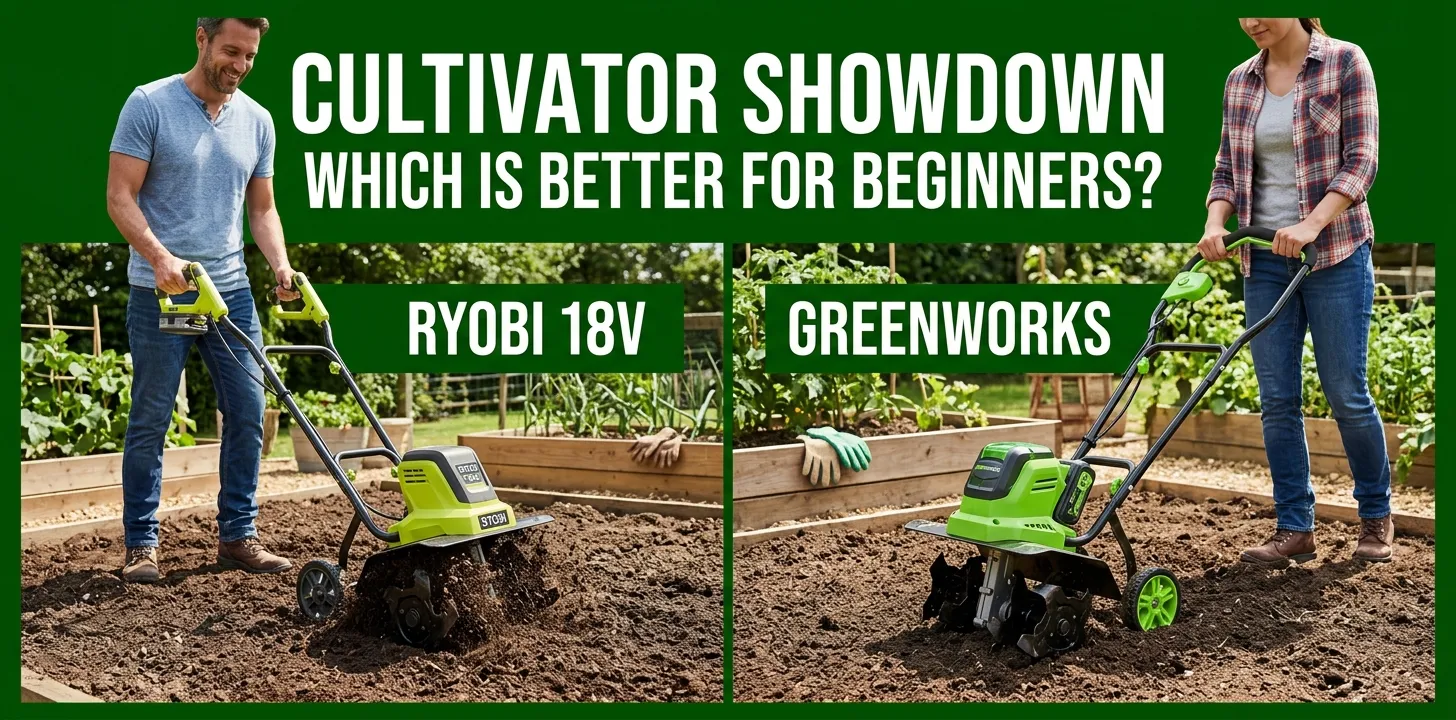
Ryobi 18V Cultivator or Greenworks Cultivator? Which Is Better for Beginners?

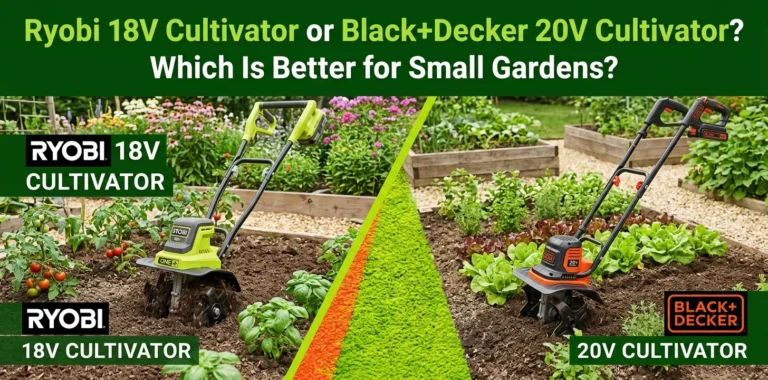
For beginners, the Ryobi 18V ONE+ Compact Cultivator is the easier choice for small garden beds because it is compact, has three speed settings, removable metal tines, and a front handle for better control. Greenworks has the advantage when you need a larger 40V cultivator with wheels, up to 10 inches of tilling width, and up to 5 inches of depth.
The right choice depends less on the brand name and more on what kind of soil you need to work, how large your garden is, and whether you already own batteries from either system.
For a first-time gardener, those details can make a bigger difference than the voltage printed on the tool.
Ryobi 18V vs. Greenworks Cultivator at a Glance
For this comparison, the Ryobi side refers to the current 18V ONE+ Compact Cultivator Kit (P2990), while the Greenworks side refers to the 40V 10-inch Cordless Cultivator/Tiller (27062). Greenworks also sells other cultivators and a 10-inch attachment, so specifications can vary by model.
| Feature | Ryobi 18V Compact Cultivator | Greenworks 40V 10″ Cultivator/Tiller |
|---|---|---|
| Battery platform | 18V ONE+ | 40V |
| Best use | Small gardens and flower beds | Larger garden beds and general tilling |
| Tilling width | Compact design | 8.25–10 inches |
| Tilling depth | Designed for light cultivation | Up to 5 inches |
| Speed control | 3 speeds: 176, 204, 233 RPM | 2,000 strokes/minute |
| Tines | Removable metal tines | Four forward-rotating steel tines |
| Wheels | No rear transport wheels on the compact model | 6-inch rear wheels |
| Battery kit | 2Ah battery and charger option | 4.0Ah battery and charger option |
| Current listed kit price | $159 | $299.99 |
| Warranty | Check the specific kit | 3-year limited tool and battery warranty on the kit |
Specifications and listed prices can change, so check the manufacturer’s current product page before buying.
Which One Is Easier for a Beginner?
Ryobi has the edge for beginners working in small beds.
The current Ryobi 18V Compact Cultivator is built around control rather than maximum coverage. It has a compact design, front handle, removable metal tines, and three speed settings. That makes it easier to adjust the tool to lighter cultivation jobs.
That matters if you’ve never used a powered cultivator before.
A beginner may be working around flowers, vegetables, seedlings, or narrow garden rows. A smaller cultivator is easier to position without disturbing as much soil.
Greenworks is also beginner-friendly, but its design is more suited to covering a larger area. Its 40V model has rear wheels, four forward-rotating tines, adjustable width, and adjustable depth. Those features can make longer tilling jobs easier, but the machine is more substantial than the compact Ryobi.
Why the Ryobi feels less intimidating
The Ryobi’s three-speed control is particularly useful for someone learning how to cultivate soil.
You don’t always need maximum speed. Starting at a lower setting can help you get a feel for how the tines interact with loose soil before moving faster.
The removable tines are another practical touch because cleaning the working parts after gardening is simpler.
Greenworks Is Better for Larger Garden Beds
If your idea of a “small garden” is actually a sizeable backyard vegetable plot, the Greenworks 40V model becomes more attractive.
It offers an adjustable tilling width from 8.25 to 10 inches and a maximum tilling depth of 5 inches. Greenworks also rates it for tilling up to 1,000 square feet and lists a maximum runtime of up to 40 minutes.
The rear wheels are useful here.
Instead of carrying the cultivator between areas, you can roll it across the yard. That can make a noticeable difference when preparing several garden beds.
The trade-off is that you are buying a larger tool for a job that may not require one.
What About Hard or Untilled Soil?
Neither model should automatically be treated as a substitute for a heavy-duty rear-tine garden tiller.
This is one of the most important points for a first-time buyer.
Cultivators are especially useful for loosening and mixing already workable soil, maintaining beds, controlling weeds between rows, and preparing established garden areas. A compact cultivator is not necessarily the right tool for breaking completely untouched, compacted ground.
The Greenworks 40V model has more substantial tilling hardware and reaches up to 5 inches deep, so it is the stronger choice between these two when you need more soil-working capability.
But if you’re facing very hard clay or heavily compacted ground, don’t assume that a cordless cultivator will make the job effortless.
A better approach for beginners
If the soil is very hard, water it appropriately beforehand and work in shallow passes rather than trying to force the cultivator deep into the ground in one attempt.
Also remove large rocks, branches, and other debris from the area first. A cultivator’s rotating tines can throw debris, so eye protection and following the manufacturer’s safety instructions are important.
Battery Platform May Decide the Winner
If you already own cordless outdoor tools, this may be the easiest decision.
The Ryobi 18V ONE+ system is a large battery platform. Ryobi says its 18V ONE+ system includes more than 300 compatible products.
Greenworks takes a similar platform approach with its 40V system. The company says its 40V battery can power more than 75 tools.
So consider what you already have.
If you already own Ryobi 18V batteries
The Ryobi cultivator makes more financial sense because you may only need the tool itself.
You can also continue using the same battery family for other compatible Ryobi tools.
If you already own Greenworks 40V batteries
The Greenworks cultivator becomes much more appealing.
You can buy the tool-only version instead of paying for another battery and charger. Greenworks currently lists the tool-only 40V cultivator at $219.99, while the kit with a 4.0Ah battery and charger is listed at $299.99.
Do not buy based on voltage alone. Ryobi 18V batteries and Greenworks 40V batteries belong to different platforms and are not interchangeable.
Ryobi 18V or Greenworks 40V: Which Gives You Better Control?
For a beginner, control can matter more than raw power.
The Ryobi compact model has a front handle and three speed settings. These features give you more ways to adjust how aggressively you work the soil.
Greenworks gives you adjustable tilling width and depth plus rear wheels. Those features are useful when covering larger areas and keeping the machine moving steadily.
Think of the difference this way:
- Ryobi: easier to position and adjust for smaller jobs.
- Greenworks: better suited to moving through a larger garden area.
- Ryobi: better fit for flower beds and light cultivation.
- Greenworks: better fit for more substantial garden preparation.
Which Is Better for a Small Vegetable Garden?
For a small vegetable garden with established beds, Ryobi is usually the better beginner choice.
Imagine a 50- to 100-square-foot vegetable bed with loose soil where you need to loosen the top layer before planting. You don’t need the largest cultivator available. A compact model is easier to maneuver between garden areas and easier to store afterward.
Now imagine a much larger backyard garden that needs regular soil preparation.
In that situation, Greenworks makes more sense because its 10-inch path and rear wheels let you cover more ground per pass. Its manufacturer also rates the model for up to 1,000 square feet of tilling.
Which Is Better for Flower Beds?
Ryobi is the better match for flower beds.
Its current compact cultivator is specifically described by Ryobi as being ideal for small gardens and flower beds. The compact design also makes sense when you’re working around plants where precise positioning matters.
A larger cultivator can still work in open flower beds, but you may find a compact tool easier when the planting area is crowded.
For beds containing established plants, work carefully and keep the rotating tines away from plant stems and shallow roots.
Which Is Easier to Store?
The Ryobi compact cultivator has the advantage if storage space is limited.
A small garden tool is easier to place on a garage shelf or in a garden shed than a larger wheeled cultivator.
Greenworks does have a foldable handle, which helps reduce its storage footprint.
Still, the Greenworks machine is designed more like a traditional small tiller, while the Ryobi compact model is aimed at smaller cultivation jobs.
If you live in a home with limited garage or shed space, measure your available storage area before buying either one.
What If You Need a Cultivator Attachment?
This is where the comparison gets more complicated.
Greenworks also sells a 10-inch Cultivator Attachment for compatible attachment-capable string trimmers. The attachment has a 10-inch tilling width and up to 5 inches of tilling depth.
That can be useful if you already own a compatible Greenworks powerhead.
It can also work with certain compatible Ryobi string trimmers, according to Greenworks’ compatibility information. However, an attachment is a different setup from the dedicated Ryobi 18V cultivator discussed above.
Before buying an attachment, verify the exact model number of your powerhead. “Greenworks” or “Ryobi” alone does not guarantee compatibility.
What Beginners Should Not Expect From Either Tool
A cordless cultivator can make garden preparation easier, but it does not remove every difficult part of gardening.
Neither option is a magic solution for:
- Extremely hard, compacted ground
- Large areas of untouched soil
- Very rocky soil
- Deep excavation
- Removing large roots
- Replacing a full-size tiller for major land preparation
The job becomes much easier when you match the tool to the soil condition.
For routine cultivation of an existing garden, either brand can make sense. For major ground breaking, look at a more powerful tiller designed for that specific task.
Ryobi 18V vs. Greenworks: Which Should You Buy?
Choose the Ryobi 18V Compact Cultivator if you:
- Are new to powered garden tools
- Have a small vegetable garden
- Mostly maintain flower beds
- Want better speed control
- Have limited storage space
- Already own Ryobi 18V ONE+ batteries
- Prefer a compact tool
Choose the Greenworks 40V Cultivator/Tiller if you:
- Have a larger garden area
- Want a wider tilling path
- Need up to 5 inches of tilling depth
- Prefer rear wheels for moving the tool
- Already own Greenworks 40V batteries
- Want a more traditional wheeled cultivator
- Need to cover more ground per pass
Frequently Asked Questions
Is the Ryobi 18V cultivator good for beginners?
Yes. The current Ryobi 18V Compact Cultivator is designed for small gardens and flower beds and includes a front handle and three speed settings. Those controls can make it easier for a first-time user to learn how the tool behaves in different soil conditions.
Is Greenworks 40V better than Ryobi 18V for hard soil?
The Greenworks 40V 10-inch cultivator is the stronger choice of these two for more demanding garden preparation because it offers four steel tines, adjustable width, and up to 5 inches of tilling depth. However, extremely hard or untouched ground may still require a more powerful full-size tiller or additional soil preparation.
Can I use a Greenworks cultivator attachment with a Ryobi tool?
Some Greenworks 10-inch cultivator attachments are listed as compatible with certain Ryobi attachment-capable string trimmers. Compatibility depends on the exact model, so check the manufacturer’s compatibility list for your specific powerhead before purchasing.
The Bottom Line for Beginners
Ryobi 18V is the better overall choice for most beginners with small gardens. Its compact design, adjustable speed, front handle, and focus on light cultivation make it less tool than you need for a small garden while still giving you powered soil preparation.
Greenworks 40V is the better choice when your “small garden” is closer to a larger backyard plot. Its 8.25- to 10-inch adjustable width, 5-inch maximum depth, rear wheels, and larger battery platform make it more suitable for covering more soil.
One practical tip: choose the battery platform you already own before comparing small differences in features. If you have no batteries from either brand, choose Ryobi for compact garden work and Greenworks when wider coverage and deeper cultivation matter more.